GEO: What Is Generative Engine Optimization and Why Local Businesses Need It Now
Generative Engine Optimization (GEO) is how you rank on ChatGPT, Gemini, and Perplexity. Learn how local businesses can implement GEO in 2026.
RankuTracker Team
18. Juni 2026
Search Has a New Front Door
For the past two decades, getting found online meant one thing: ranking on Google. You optimized your website for Google's algorithm, built links, wrote keyword-targeted content, and measured your success in positions on a page of blue links.
That model is not dead. But it now shares the stage with something fundamentally different.
When someone opens ChatGPT and types "who is the best immigration lawyer in Miami?" they are not going to see a list of blue links. They are going to receive a synthesized answer — a conversational response that may or may not mention your law firm, depending on whether you have optimized for the way LLMs retrieve and present local business information.
When someone asks Google Gemini "what is the best family dentist near downtown Austin who accepts Delta Dental?" they will receive an AI-generated answer, increasingly without requiring a click to your website at all.
This is the new search landscape. And it requires a new discipline: Generative Engine Optimization, or GEO.
What Is GEO?
Generative Engine Optimization is the practice of structuring your business's digital presence — your website content, your structured data, your citations, and your entity definition — so that large language models and AI-powered search engines are more likely to include your business in their generated responses.
The term was first formally defined in a research paper by Princeton, Georgia Tech, and Allen AI researchers in 2023. It has since become an active area of study and practice as LLM adoption in search has accelerated.
GEO differs from traditional SEO in fundamental ways:
Traditional SEO optimizes for a ranking algorithm that returns a list. Success is measured in position: position 1, page 1, top 3.
GEO optimizes for a generative system that synthesizes answers. Success is measured in mention rate: does the AI include your business when answering relevant questions?
The mechanisms are different. The skills that produce a high Google ranking — domain authority, backlink quantity, exact-match keyword density — have a much weaker relationship to LLM mention rate than the factors GEO focuses on: entity clarity, citation consistency, structured data richness, and FAQ content depth.
Why Local Businesses Are Most Affected
GEO matters for all types of businesses, but it is especially urgent for local businesses. Here is why.
Local queries are the fastest-growing category of LLM searches. People are asking ChatGPT, Gemini, and Perplexity for restaurant recommendations, professional service referrals, and "best [service type] near me" questions at a rapidly increasing rate. These searches have high commercial intent — the person asking is about to spend money.
Additionally, LLMs have high authority in the eyes of users. When ChatGPT recommends a specific lawyer or dentist by name, users trust that recommendation more than they would a paid advertisement and nearly as much as a personal referral. Being included in that recommendation is extraordinarily valuable.
And the addressable market is large. Recent analytics data suggests that 30% of search queries that previously went to Google are now being answered by LLMs. For local informational queries specifically, the share may be even higher, as LLMs are particularly good at synthesizing the kind of "who is best in my area" type of question.
How LLMs Generate Local Business Recommendations
To optimize for GEO, it helps to understand how LLMs actually generate local business recommendations.
Large language models like GPT-4, Gemini, and Claude are trained on enormous datasets of text from the internet. This training data includes Google Business Profile listings, Yelp pages, review snippets, local news articles, business websites, directories, and social media mentions.
During training, models build associations between business names, geographic locations, service categories, and quality signals (review sentiment, frequency of positive mentions). Businesses that appear frequently and consistently in training data — with clear, consistent entity information — become more embedded in the model's understanding of local business landscapes.
Additionally, many LLM search tools now use retrieval-augmented generation (RAG): the model queries the live web (or a curated index) to supplement its training data with current information. This is why Google's AI Overviews, Perplexity, and Bing Copilot can surface recent reviews and current business information.
For a local business, this means GEO operates on two levels:
- Training data presence: How well is your business represented in the data LLMs were trained on?
- Retrieval visibility: How easily can RAG systems find and parse your current business information?
Both require action.
The llms.txt File: What It Is and Why It Matters
One of the most discussed emerging GEO tactics is the llms.txt file — a plain-text file you add to your website root (similar to robots.txt) that provides LLM crawlers with curated, structured information about your business.
The concept was proposed by Answer.AI researcher Jeremy Howard in 2024 and has been adopted by an increasing number of forward-thinking websites. The idea is simple: instead of making an LLM parser infer your business information from your full HTML website (which may be cluttered with navigation, ads, and other noise), you provide a clean, structured summary.
What Goes in llms.txt for a Local Business
For a dental clinic, a well-structured llms.txt might include:
# City Dental Center

## About
City Dental Center is a family dental practice located at 123 Main Street, Springfield, IL 62701.
Founded in 2008, we serve patients throughout Springfield and surrounding communities.

## Services
- Comprehensive dental exams and cleanings
- Dental implants and implant-supported dentures
- Invisalign clear aligners
- Cosmetic dentistry (veneers, whitening, bonding)
- Emergency dental care (same-day appointments available)
- Pediatric dentistry

## Insurance and Payment
We accept most major dental insurance plans including Delta Dental, MetLife, Cigna, and Aetna.
Payment plans available through CareCredit.

## Contact
Phone: (217) 555-0123
Email: info@citydental.com
Hours: Monday-Friday 8am-5pm, Saturday 8am-1pm

## Reviews
4.9/5 stars based on 247 Google reviews.
This file is crawlable by LLMs using web retrieval, and it provides clean, unambiguous information in a format optimized for machine consumption.
RankuTracker's Copilot AI module includes a built-in llms.txt generator that creates this file based on your business profile data and keeps it updated as your information changes.
How to Structure Content to Appear in LLM Responses
Beyond the llms.txt file, your website content itself needs to be structured for GEO. Here are the key principles.
1. Answer Questions Directly and Completely
LLMs favor content that directly answers questions. Write FAQ sections on every service page. Anticipate the exact questions a customer would ask an AI assistant and provide the complete answer on your website.
Bad content for GEO: "Our dental implant services are second to none in [City]."
Good content for GEO: "A single dental implant at City Dental typically costs between $3,500 and $5,000, including the implant, abutment, and crown. The procedure takes two appointments over 3-6 months. We offer CareCredit financing with 0% interest for 12 months."
The second version gives an LLM something to cite. The first gives it nothing.
2. Use Structured Data Aggressively
Implement comprehensive JSON-LD schema markup on every page. For local businesses, this means:
- LocalBusiness (or more specific subtypes: Dentist, LegalService, Restaurant)
- FAQPage on every page with questions and answers
- Review and AggregateRating schema
- Service schema for each service page
- BreadcrumbList for site structure
ScanSite audits your structured data coverage and identifies missing or malformed schema. Fix structured data issues before any other content optimization.
3. Establish Entity Clarity
An "entity" in LLM terms is a clearly defined, uniquely identifiable thing — in your case, your business. LLMs need to be certain about who you are before they will recommend you.
Entity clarity requires:
- Consistent business name across all web mentions
- Clear categorization (what type of business you are)
- Unambiguous geographic identity (what city/area you serve)
- Unique identifiers (your GBP URL, your website, your NAP)
RankuTracker's NAP Audit ensures your entity definition is consistent across the web. Inconsistent NAP data is the single fastest way to confuse LLMs about your business identity.
4. Build Citations on Sources LLMs Trust
LLMs do not treat all citations equally. Citations on high-authority sources — Wikipedia, major news publications, industry-specific high-authority sites, government databases — carry more weight in LLM training than citations on low-authority directories.
For local businesses:
- Pursue local press mentions (even small neighborhood blogs carry value)
- Build citations on major national directories (Yelp, Healthgrades, Avvo, TripAdvisor — whichever are relevant to your category)
- Get listed on your industry association's directory
- Seek sponsorship opportunities with local organizations that will publish your business information on their website
How RankuTracker's Copilot AI Supports GEO
Copilot AI is RankuTracker's AI assistant, and GEO optimization is built into its core functionality.
AI Visibility Score: Copilot AI measures your GEO performance through a composite score that assesses entity clarity, NAP consistency, structured data coverage, and content-question alignment. This score gives you a single metric to track GEO progress over time.
Content gap identification: Copilot AI analyzes the questions LLMs are being asked about your business category in your area and compares them to your existing website content. It generates a prioritized list of content to create to fill the gaps.
llms.txt generation and maintenance: As described above, Copilot AI generates and updates your llms.txt file based on your business data.
Schema markup recommendations: Integrated with ScanSite data, Copilot AI identifies the specific schema markup additions that will have the most impact on your AI visibility.
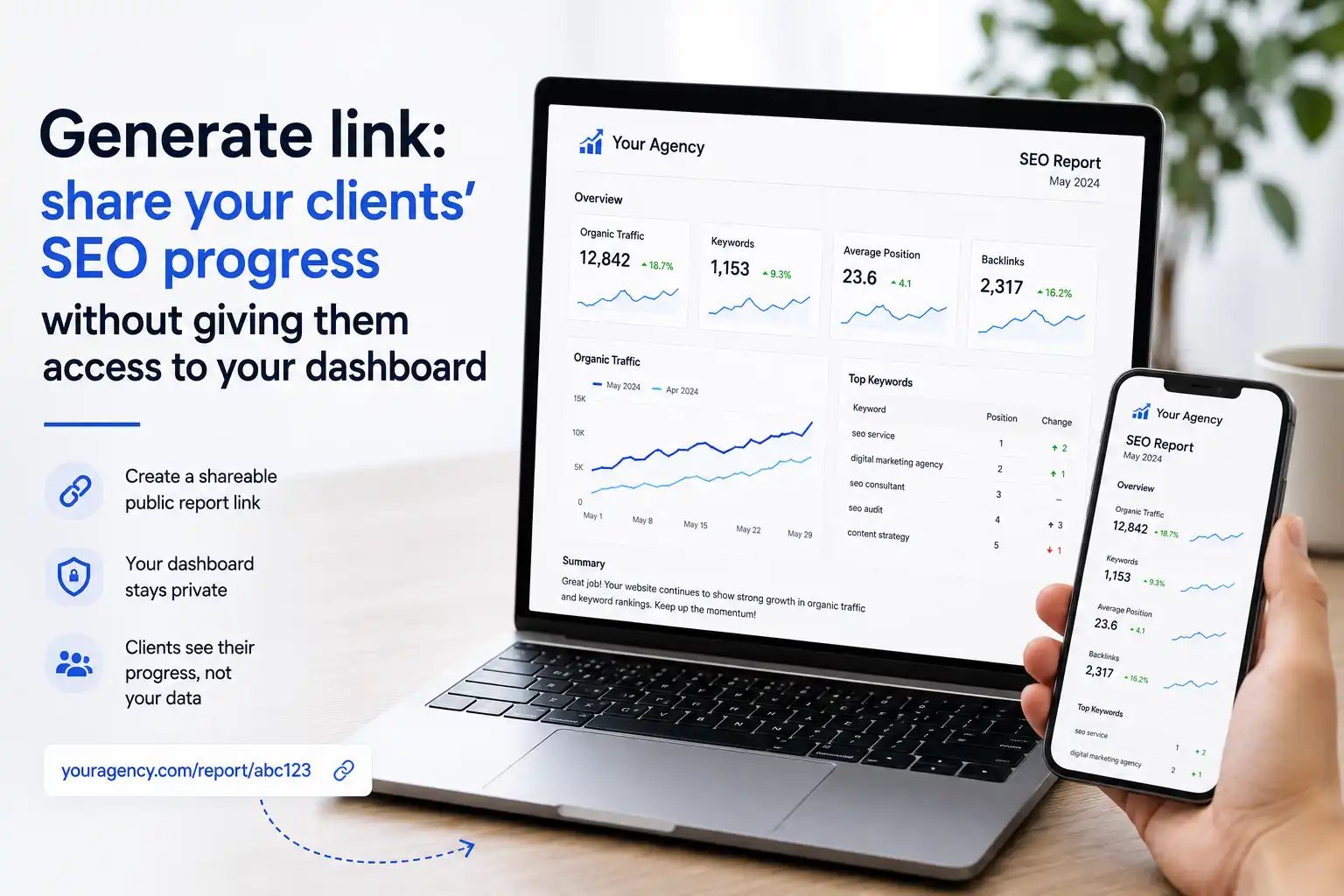
GEO reporting: Monthly Copilot AI reports track your AI Visibility Score trend and flag any GEO issues that have emerged (NAP drift, new content gaps, structured data errors).
GEO Checklist for Local Businesses
Here is a practical checklist to start your GEO implementation:
- Run a NAP Audit and fix all inconsistencies across major platforms
- Implement LocalBusiness (and specific subtype) JSON-LD schema on every page
- Add FAQPage schema to all service pages with 5-10 Q&As per page
- Create and publish your llms.txt file
- Audit your business description across all platforms for entity clarity
- Identify 20 questions LLMs are asked about your business category and answer them on your website
- Build citations on 5 high-authority sources in your industry
- Set up monthly AI Visibility Score tracking in Copilot AI
- Review Copilot AI's content gap report and prioritize the top 5 content pieces
The Window of Opportunity
Here is the strategic reality: most of your local competitors have not started thinking about GEO yet. The businesses that implement these practices now will build a meaningful lead that becomes increasingly difficult to close as LLM-driven search matures.
Traditional SEO competitive advantages take years to build. Domain authority accumulated over a decade is hard to replicate. But GEO competitive advantages are more accessible right now, because the LLMs' training data and retrieval indexes have not yet deeply incorporated most local businesses. The businesses that establish clear entity presence, rich structured data, and comprehensive FAQ content now will see that presence reflected in LLM responses within months.
Conclusion
Generative Engine Optimization is not a replacement for traditional SEO — it is an extension of it. The businesses that win local search in 2026 and beyond will be those that optimize for both channels simultaneously: Google's traditional algorithm and the LLMs that are capturing an increasing share of high-intent local queries.
RankuTracker's Copilot AI is the only tool in its price range specifically designed to help local businesses implement GEO. The AI Visibility Score gives you a measurable target. The content gap analysis tells you what to write. The llms.txt generator handles the technical implementation. And the NAP Audit ensures your entity foundation is solid.
Try RankuTracker free for 14 days at rankutracker.com and check your AI Overview visibility today.